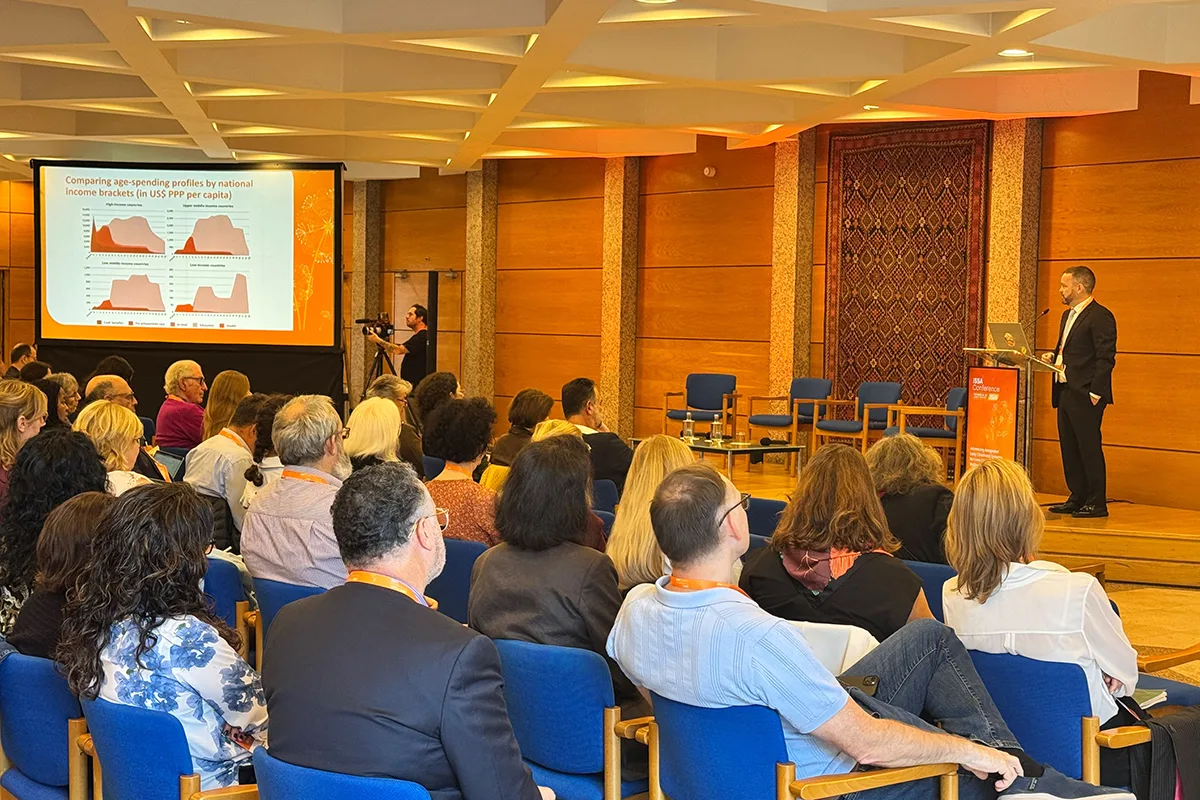
How can different services, policies and investments work together to improve children’s lives? This question shaped ISSA Conference 2026, held in Lisbon on 22–23 October and co-hosted by ISSA – International Step by Step Association, the Learning for Well-being Institute and APEI – Associação de Profissionais de Educação de Infância.
Bringing together practitioners, researchers, policymakers, funders and other actors working across early childhood, the conference examined the structures, resources and relationships needed to support children’s rights, equity and holistic well-being.
Exploring integration together
The conference was organised around three interconnected strands: governance, financing and measurement, and the relationships that sustain cooperation across sectors.
Its format encouraged participants to engage directly with one another, bringing experiences from different contexts into discussions about what works, what creates barriers and what needs to change. Insights from the workshops were brought together in a closing plenary, providing a basis for continued learning and action.
For the Institute team, the emphasis on dialogue was particularly valuable. The discussions created opportunities to challenge assumptions, compare approaches and examine practical questions that remain unresolved.
Keeping children at the centre
In his opening keynote, Beyond Coordination: Integrated Early Childhood Systems for Rights, Equity and Holistic Well-Being, Dominic Richardson, Managing Director of the Learning for Well-being Institute, argued that stronger coordination must serve a clear shared purpose. Better referrals, shared data and closer cooperation between services can all contribute to integration. Their value ultimately depends on whether they help reduce inequality, uphold children’s rights and improve well-being.
Dominic also emphasised the importance of organising policies around children’s development from before birth, rather than working backwards from school age. This requires greater attention to how financing, workforce development, governance and services complement one another.
An important practical question is how the work of different actors connects. Progress achieved in one part of the system may create the conditions another needs to succeed. Understanding these relationships can help identify gaps, overlaps and opportunities for more coherent support.
Evidence was another recurring theme in many sessions. Alongside understanding what individual initiatives achieve, participants considered the need for reliable data that can show whether policies and services are improving outcomes across the population.
Taking the conversation beyond Lisbon
One challenge that remains particularly relevant is bringing these discussions beyond the early childhood field and engaging the wider range of actors whose decisions influence children’s lives.
The conference also marked an important step towards the first Global Early Years Finance Summit, taking place in London on 2–3 June 2027. As an official pre-summit regional dialogue, the Lisbon gathering contributed to wider efforts to strengthen political commitment and investment in the early years.
The Summit aims to mobilise new financing and support governments and partners in developing concrete commitments for young children and families. The questions explored in Lisbon, from how resources are allocated to how services connect and outcomes are measured, are directly relevant to that ambition.
The challenge now is to bring these perspectives into the policy and investment decisions that shape children’s lives, ensuring that cooperation across sectors delivers meaningful improvements in their well-being.