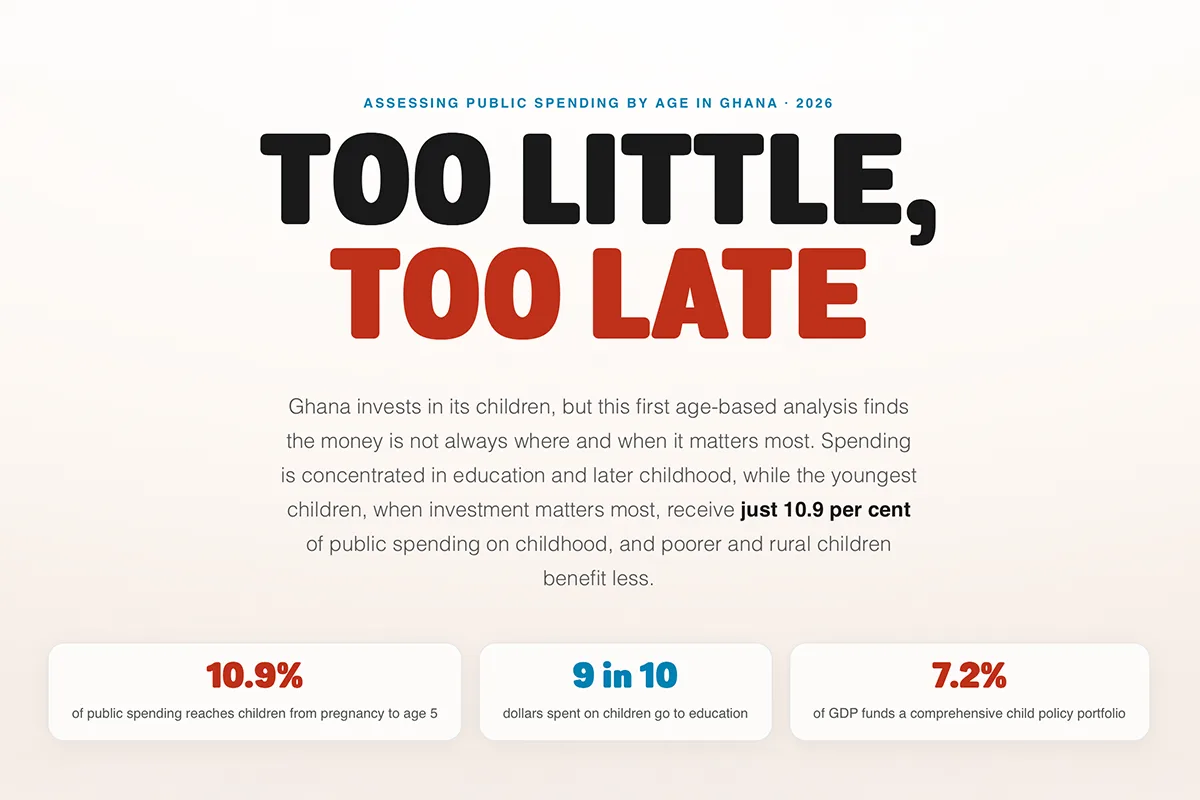
Ghana has made important progress in advancing policies and programmes to improve outcomes for children. However, emerging evidence highlights imbalances in how public resources are allocated across the child life cycle, with comparatively limited investment in the earliest years, when it can have the greatest impact.
This policy brief examines investment patterns across age groups, income levels and geographic contexts, and explores their implications for equity, child development and long-term human capital outcomes. It also reviews policy frameworks and models reform scenarios, proposing pathways towards a more balanced child policy portfolio and increased investment in the early years.
This policy brief was developed by UNICEF Ghana and informed by analysis from the Learning for Well-being Institute.