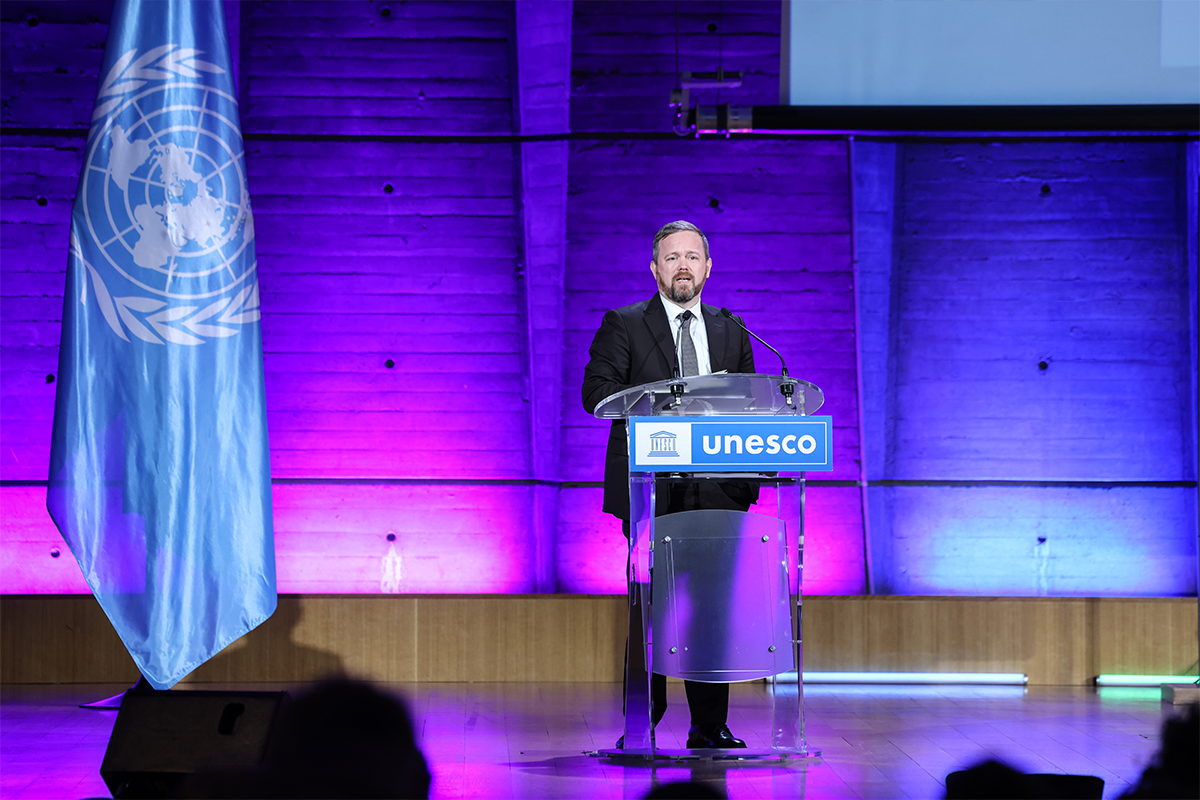
On 20 November 2026, World Children’s Day, UNESCO launched the second edition of its Global Report on Early Childhood Care and Education at its headquarters in Paris.
Jointly published by UNESCO, UNICEF and the OECD, this year’s report focuses on financing for equity, inclusion and quality. The two-day high-level event brought together government representatives, international organisations, researchers and development partners to discuss the report’s findings and explore ways to strengthen investment in early childhood.
The Learning for Well-being Institute contributed to the research underpinning the Global Report and to the policy discussions held during its launch.
The research behind the Global Report
The 2026 Global Report draws substantially on new evidence from First Things First: Delivering Early Childhood Policies to Optimize Education and Well-being, a forthcoming technical report jointly developed by UNESCO and the Learning for Well-being Institute, under the research leadership of Dominic Richardson.
The research brings together analyses of public expenditure on children, governance arrangements and evidence on the effectiveness of child policies across different national contexts. It examines how governments can better prioritise and sequence investments throughout childhood, with particular attention to the earliest years.
One of the issues addressed is the distribution of public spending across childhood. Despite the importance of the first years of life for children’s development, public investment in children tends to peak around early adolescence.
Building systems around how children develop
Dominic Richardson, Managing Director of the Institute, delivered the keynote for a high-level panel on delivering early childhood policies through intersectoral and integrated social investment.
Moderated by Maniza Ntekim of the Conrad N. Hilton Foundation, the session brought together government representatives from the Democratic Republic of the Congo, Cabo Verde and Côte d’Ivoire.
Richardson opened his presentation by reflecting on the kind of society public policies should help build: one characterised by peace, shared prosperity, quality relationships and opportunities for individuals to realise their unique potential. He spoke about innate human capacities, including listening, enquiring and empathising, and the importance of nurturing them from the earliest years of life.
Drawing on the research, he questioned why public systems for children are often built around the school years rather than around the way children develop from and before birth. His presentation highlighted the need to reconsider both the timing of public investment and the way policies across health, education, care and social protection are organised.
Creating fiscal space for investment in children
Asked during the panel to identify one priority action for financing early childhood development, Richardson proposed a debt standstill initiative for children. Drawing on the precedent established by the G20 during the COVID-19 pandemic, the proposal explores how temporary debt relief could create fiscal space for investment in children in countries facing significant debt pressures.
Discussions at the launch will inform preparations for the 2027 World Summit on Financing Early Childhood Care and Education.
The forthcoming First Things First report will explore these questions in greater depth, providing evidence and policy options to support governments in their investment decisions throughout childhood.