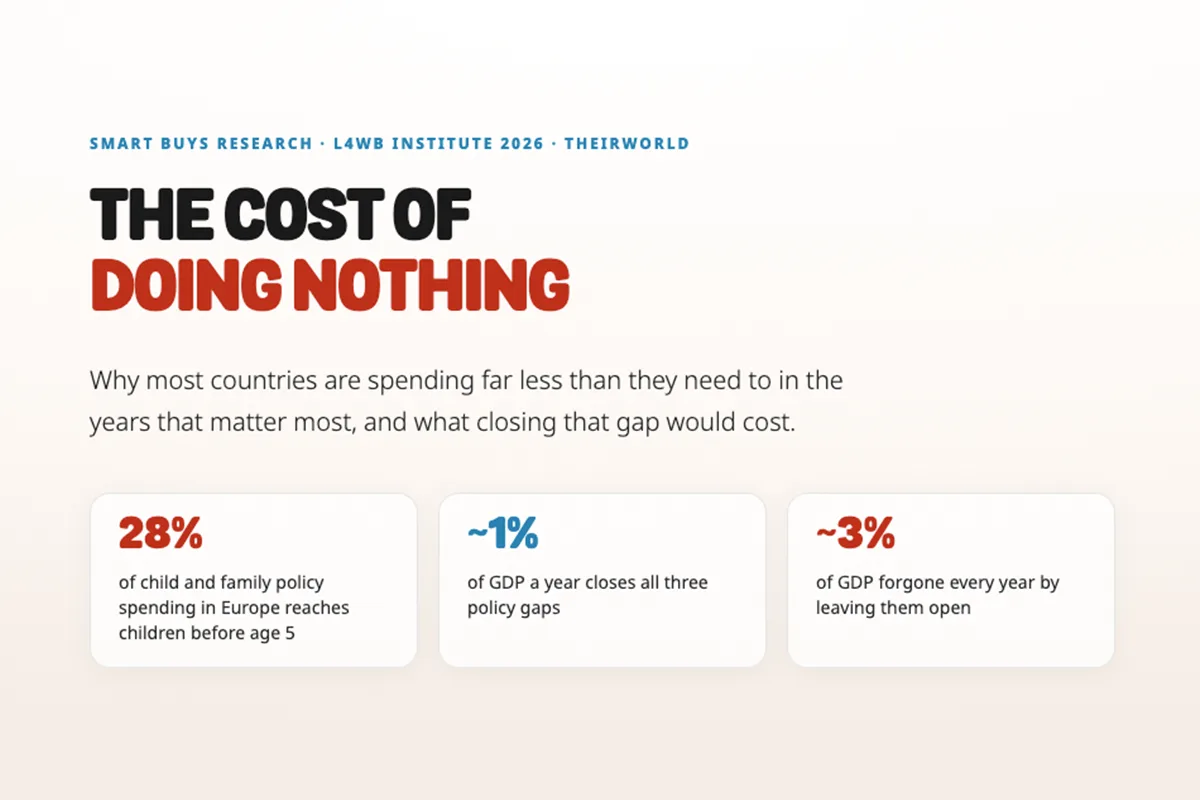
Governments face growing fiscal pressure, while families contend with rising costs that limit their ability to provide nurturing care in early childhood. Despite clear evidence that investing in early childhood yields the highest long-term returns, this period remains significantly underfunded worldwide.
This paper examines how universal family policies, especially universal child benefits and paid parental leave, act as key financing tools to improve early childhood outcomes. Drawing on a structured literature review and quantitative analysis across OECD countries, it shows that underinvestment in family policy carries measurable economic and social costs.
The findings demonstrate that a universal approach to family policy can reduce child poverty and improve child health, nutrition, and early learning. Parents also benefit from this approach, which supports parental engagement and enables better participation in the labour market, particularly for women. Findings also show that the most sustained impacts occur when policies function as coordinated systems, combining income support, parental leave, and accessible childcare services.
This paper is part of the Big Wins for Early Childhood report. It was developed through the Act For Early Years campaign.